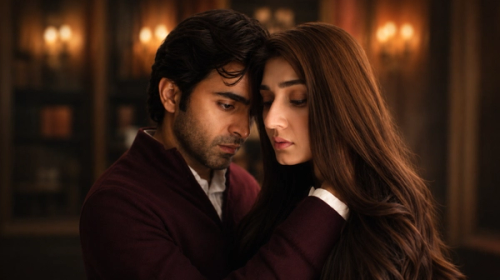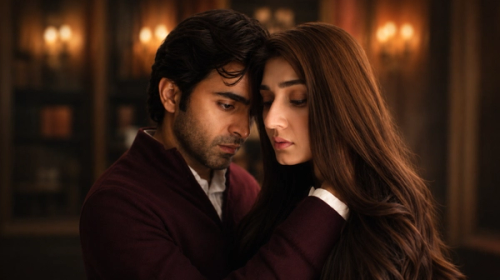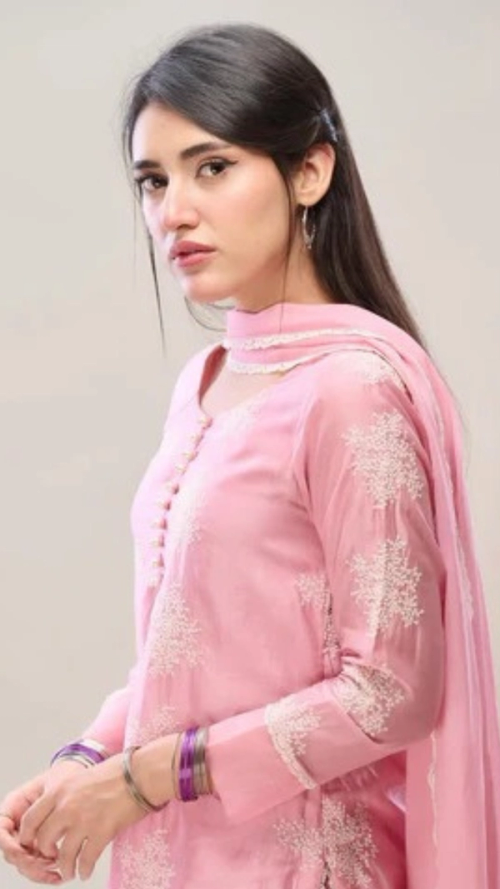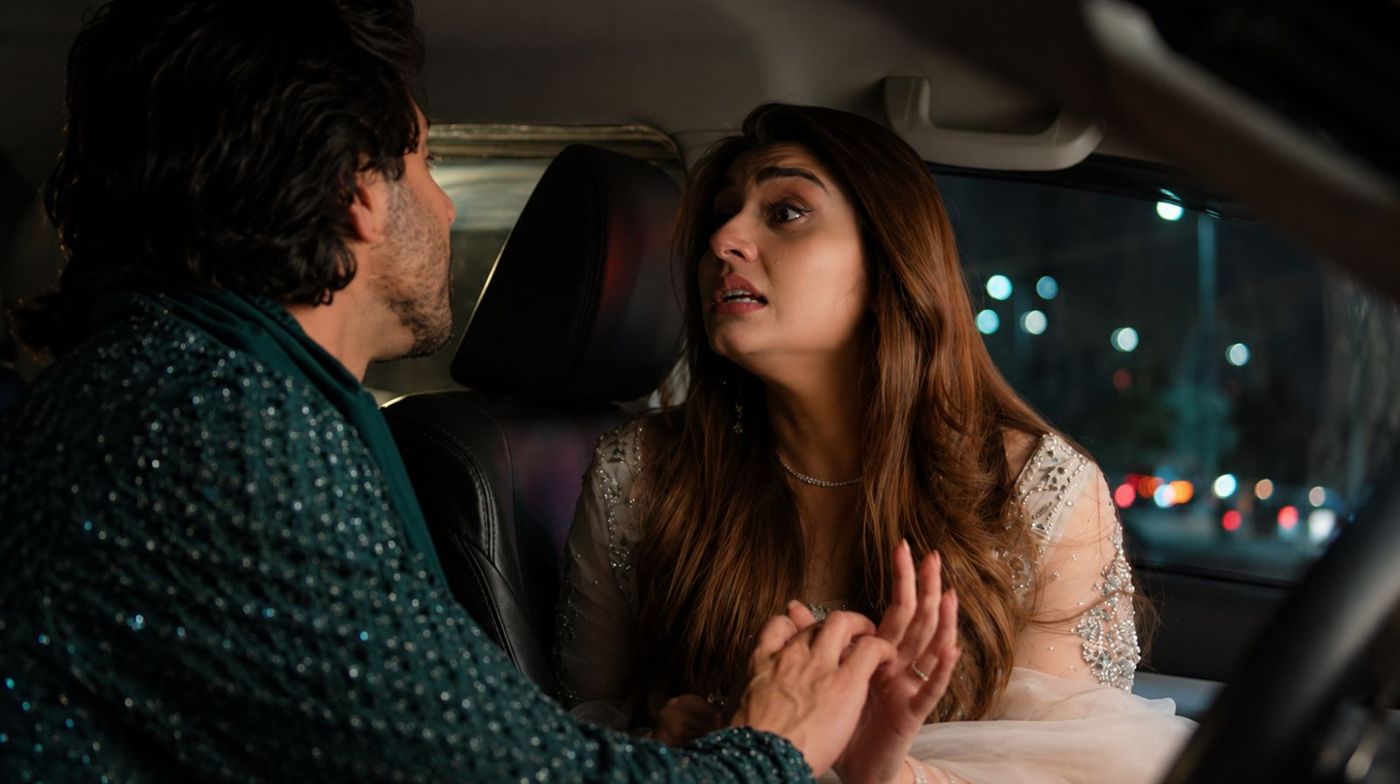
Yes! Believe it or not, Zamil and Zaryab’s connection has crossed into physical intimacy.
Umera Ahmed is among the best known figures in the field of Urdu fiction and television writing in Pakistan. The drama she has most recently produced, Dar-e-Nijaat, which is currently being broadcast on ARY Digital, has attracted considerable attention both because of its portrayal of themes such as love, faith, sacrifice and pressure from different generations and because of a recent scene which has led to extensive debate among viewers. The controversy revolves around what may imply pre-marital intimacy between two young characters, and the writer has herself stated the reason for including this element. To understand the deeper meaning of that scene, we must first explore Umera Ahmed's literary journey and the recurring themes in her storytelling (or either you can skip this section).
Who Is Umera Ahmed?
Umera Ahmed was born in Sialkot, in the Punjab region of Pakistan, on 10 December 1976. She obtained a master's degree in English Literature from Murray College in Sialkot, a college which has always been associated with Allama Muhammad Iqbal. Following her studies she taught English for a short time at Army Public School in Sialkot before deciding to concentrate on writing.
In 1998 she started her career as a professional writer by publishing short stories in monthly Urdu periodicals. The story which was her first to be published, Zindagi Gulzar Hai, had been written when she was 21 and soon attracted a large number of readers before being developed into a full-length novel. This novel in turn was turned into the widely popular television drama of the same name in 2012, which featured Sanam Saeed and Fawad Khan. Umera has stated on record that the main female character, Kashaf, was inspired by certain aspects of her own personality.
She has produced over 30 books throughout the years, comprising both novels and collections of short stories; among her most acclaimed books are Peer-e-Kamil (2004), which earned her widespread fame, Meri Zaat Zarra-e-Benishan, Alif, Shehr-e-Zaat, Man-o-Salwa, Amar Bail, Aab-e-Hayat (the sequel to Peer-e-Kamil), and some other works. A number of these have been adapted for television and as a result have become part of some of the most well-known Pakistani dramas of the last two decades.Her writing frequently deals with themes such as spiritual transformation, moral dilemmas, class differences, and the conflict between worldly pressures and faith. Umera Ahmed has won a number of Best Writer awards, such as the one given at the Lux Style Awards for Meri Zaat Zarra-e-Benishan and another for Zindagi Gulzar Hai. She is married to Arsam Aftab, who was a captain in the Pakistan Army and an officer with the Inland Revenue Service; the two of them got married in a private nikah in 2014.Dar-e-Nijaat (also known as the Door of Salvation or the Door of Repentance) was written by Umera Ahmed and directed by Saqib Khan; it first aired on ARY Digital on 1 August 2026 and is shown every Friday and Saturday at 8:00 PM. The programme is produced by 3’s Entertainment and among the producers are Salman Iqbal, Sonya Iqbal and Sheheryar Munawar.The story centres on a number of interrelated lives, these being shaped by themes of love, sacrifice, forgiveness, ambition and spiritual questioning. Among the main characters are: as Abu Bakar as Zaryab as Zamil as Hamna as BellaThe film also features Sania Saeed, Saba Hamid, Nadia Afgan, Mahmood Aslam, Faran Tahir and others. According to the official descriptions provided by ARY Digital, the drama is presented as a story in which the characters either move towards redemption or risk losing all they have as a result of their decisions. The early have already attracted substantial viewership and sparked considerable debate, with reviewers pointing out Umera Ahmed's typical combination of relatable Gen-Z pressures and a clear religious-moral framework.The official episodes can be found on the ARY Digital YouTube channel. For those viewers who wish to have episode-by-episode context, character analysis, information about the and continued coverage beyond the official broadcast, combines the complete drama experience in a single place.Watch In recent episodes a sequence featuring Zaryab and Zamil caused a great deal of discussion on line. Zaryab goes to Zamil's house and the scene then shifts to the following morning; when her grandmother asks her where she has been, Zaryab says nothing. The visual clues, such as the way she washes her face and hands, caused a number of viewers to conclude that the characters had been physically intimate.A fan asked Umera Ahmed directly on X (formerly Twitter) if the scene was meant to suggest that Zaryab and Zamil had been intimate, and Umera Ahmed gave a straightforward answer of "Yes". This confirmation was subsequently reported by several entertainment outlets, such as Siasat and Reviewit.pk.The response is split with some viewers and commentators praising the way a delicate subject has been handled without showing it explicitly, pointing out that the drama still sets the scene within a broader context of faith, consequences, haya, and personal responsibility. On the other hand, some people have reacted with discomfort, claiming that presenting such storylines on a programme aimed at families could have the effect of normalising behaviour which many households would prefer not to see, even indirectly.Umera Ahmed's body of work has for a long time tackled difficult personal and social realities from a moral and spiritual point of view. Dar-e-Nijaat is in keeping with this method: the implication is there, it has been made public, and the story still concentrates on the choices and their consequences rather than on the act itself.A significant part of the audience has clearly expressed concern over the idea that displaying or strongly suggesting pre-marriage intimacy on a mainstream Pakistani channel brings about a normalisation of something which many families still regard as a serious boundary. Their reasoning is simple: Pakistani television is viewed in many homes where both parents and children tend to watch together, and when a popular drama shows such a scene even without any graphic content some viewers feel that it blurs the distinction between what is acceptable and what is not.The criticism has some merit. To some degree, the concern is well founded. Television has influence; repeated images and the way stories are presented can slowly change what seems normal. Since a channel broadcasts in family time slots, the decision involves a sense of responsibility.At the same time, stories require conflict and consequences if they are to progress. When characters make mistakes, this leads to a sense of pressure which in turn causes growth, regret, or a change in circumstances. In Dar-e-Nijaat, the situation between Zaryab and Zamil is not shown as a glamorous or celebrated event; the grandmother's remarks concerning haya, the silence, the washing of one's hands and face, and the later emotional impact all indicate a state of discomfort and a sense of moral awareness rather than anything celebratory.The sequence was carried out by ARY Digital and the creative team with restraint, avoiding any explicit depiction and instead focusing on suggestion and the consequences that followed; this careful and professional method should be recognised. Yet it is reasonable to question whether this specific aspect was the only means of moving the plot forward; alternative narrative devices such as a broken promise, a public humiliation, a family confrontation, or a crisis of trust could have generated a similar level of tension without entering that area. Therefore, the decision was not inevitable.For the viewers of Dar-e-Nijaat the most important aspect is the way the scene is presented. Umera Ahmed has always regarded such moments as contributing to a broader moral journey. The drama seems to set the act within a lesson concerning accountability, the consequences of one's decisions, and the way back to faith and self-respect. Those who continue to watch the programme are more likely to notice the consequences than to be tempted to imitate the behaviour.To sum up, the criticism concerning normalisation is valid and must not be ignored. The programme is in a delicate position since, strictly speaking, it is not essential, but it is being employed to support a narrative which still aims at prompting moral reflection rather than simply promoting a message. Whether or not this balance proves successful will depend on the way the rest of the episodes handle the consequences. At the moment, the discussion demonstrates that the audience for is watching carefully and giving careful thought to what they see on screen.Zaryab is presented as a carefree young woman who leads a liberal lifestyle and who looks forward to a future with her best friend, Zamil. Abu Bakar is shown as a thoughtful young man whose character has been influenced by his mother. The reference to Zaryab and Zamil comes early on and thus has an impact on the subsequent development of the characters, their relationships, and the issues of trust, repentance, and direction. The confirmation given by Umera Ahmed eliminates any ambiguity for those studying the sequence and enables the story to proceed on the basis of that fact.It isn't the first time that a drama written by Umera Ahmed has dealt with questions of personal boundaries, class, and ambition alongside faith in the case of long-time fans of Pakistani dramas; the present debate is merely bringing one particular decision forward sooner than was anticipated.The success of Umera Ahmed's career has always come from stories that are not content to remain superficial. Whether it be Peer-e-Kamil, Zindagi Gulzar Hai, Alif or now Dar-e-Nijaat, she has repeatedly put her characters into situations that make them have to face up to their values, their desires and their faith. The recent announcement regarding the Zaryab-Zamil sequence is in keeping with this approach: it is a deliberate decision, one that has been openly admitted by the writer and which is now an integral part of the story.People will keep on watching to see how the consequences unfold. The official episodes are still the best place to watch the drama just as it was written and directed. If viewers want to obtain confirmed information about the writer, the cast, the schedule and the current discussions about the series, they can refer to Agahi Talks, which stays as a special resource for fans of Pakistani drama.