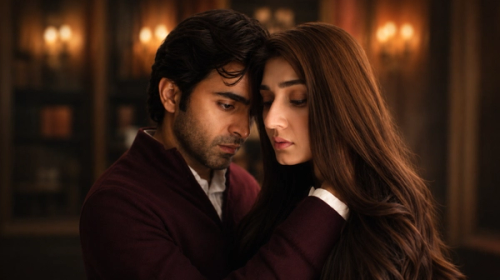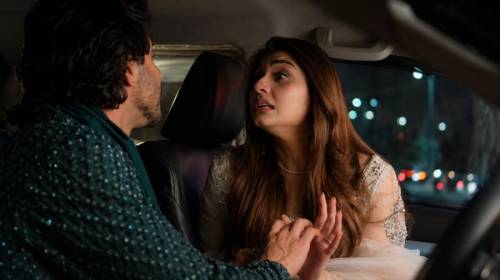
Yes, because they share the same writer, the similarities are definitely there, but let's break down what's actually going on first.
The drama Dar-e-Nijaat, which is now being shown on ARY Digital, has caused numerous viewers to think back to Umera Ahmed's earlier spiritual masterpiece Shehr-e-Zaat. Like the two stories, both exhibit the writer's distinct style in that the characters base their lives on worldly desires, suffer severe emotional setbacks, and are ultimately led towards faith and self-awareness. While the similarities are genuine and merit investigation, they lie in the theme and the overall worldview rather than in a scene-by-scene imitation.
The serial Shehr-e-Zaat began its broadcast on HUM TV on 29 June and ended on 2 November 2012. It was directed by Sarmad Sultan Khoosat and was produced by Momina Duraid through Moomal Productions and 7th Sky Entertainment. The series featured Mahira Khan as Falak Sher Afghan, Mikaal Zulfiqar as Salman Ansar, Mohib Mirza as Hamza Malik, and Samina Peerzada as Falak’s Nani. It should be noted that the year in question is 2012, not 2019; the later uploads of the entire series to YouTube have caused some misunderstanding regarding the original broadcast date.
Let's Quickly Recap Shehr-e-Zaat to Get the Full Picture
Falak is the only daughter of a wealthy family and she is both beautiful and intelligent. Her mother tells her that beauty is the most powerful thing a woman can have, while her father stays quiet and is mostly passive. Since she is studying the arts, Falak makes a sculpture of the man whom she dreams about a face that is entirely imaginary. She remains immersed in this fantasy until Salman Ansar comes into her life, at which point he is almost exactly like the sculpture: he is handsome, calm and refined.
Falak falls completely in love with him and convinces her parents to allow the marriage, after which she becomes completely absorbed in the relationship, hoping that Salman will feel towards her with the same intensity. However, Salman stays emotionally distant. As time goes on, this distance increases. Eventually, Falak finds out that Salman is having an affair with another woman, Tabinda a simple girl from a middle-class background who looks nothing like Falak.Falak is devastated by the discovery; her pride, her ambitions and her sense of identity all come to an end. She then falls into a state of depression and finally goes to live with her Nani, who is a very religious and spiritually firm woman. Rather than speaking to her in a harsh manner, Nani gently leads Falak towards prayer, the Quran and a new way of understanding love. She explains to her that the love which had broken her was love directed towards a weak human being and that true peace comes from the One who never departs and who never weakens.Falak starts to pray, begins reading the Quran and reflects upon her own inner self. She ceases to judge her value in terms of her beauty or based on a man's attention. She grasps a key point of the story: if a person makes any created thing into their god, Allah usually breaks that attachment in order that the person may return to the true Creator. Falak reconstructs herself not for the sake of the world, but for her Lord. When Salman comes back later on, broken and altered, she forgives him. The reason for her forgiveness is not that she still desires him; it is because she has now found a peace which does not rely on him.The conclusion of Shehr-e-Zaat is Falak's attainment of spiritual fulfillment; the play is not primarily concerned with romantic revenge but rather with the journey from the outer self to the inner self.Dar-e-Nijaat was also written by Umera Ahmed and is now shown on ARY Digital every Friday and Saturday at 8:00 PM. It features Sheheryar Munawar as Abu Bakar, Dur-e-Fishan Saleem as Zaryab, Nameer Nawaz Khan as Zamil and a strong supporting which consists of Sania Saeed, Saba Hamid and others. Saqib Khan is the director.Young characters who place heavy emotional investment in romantic or worldly attachmentsThe pain that follows when those attachments breakThe quiet presence of a spiritually mature older figure who points toward faithThe idea that suffering can become a door back to AllahThe contrast between outer beauty, status or lifestyle and inner emptinessThe main trauma in Shehr-e-Zaat is romantic betrayal and the breakdown of a carefully constructed fantasy, while in Dar-e-Nijaat the early scenes depict young people dealing with liberal lifestyles, forming strong attachments and experiencing the initial moral and emotional consequences. The title, Dar-e-Nijaat, also points to the same outcome: repentance and a return.Such overlaps are natural, since Umera Ahmed has returned to the same spiritual questions in several of her works in Peer-e-Kamil, Alif, Shehr-e-Zaat and most recently in Dar-e-Nijaat. She explores the modern Pakistani self which is torn between dunya and deen, between desire and accountability. People who enjoyed the subtle transformation of Falak are now readily observing similar emotional and spiritual currents in the new drama.The two dramas are different. While Shehr-e-Zaat concentrates on the journey of one woman, moving from a state of pride and romantic obsession to one of spiritual insight, Dar-e-Nijaat makes use of a broader cast and several interwoven storylines. The experiences of Zaryab, Abu Bakar, Zamil and the other supporting characters together form a more extensive picture. The clear suggestion of pre-marital intimacy between Zaryab and Zamil (a point that Umera Ahmed has publicly admitted) is a particular element of the plot which does not have a direct equivalent in Shehr-e-Zaat. Moreover, the social background has a more up-to-date feel and takes into account the pressures faced by Generation Z, something which was less important in the 2012 serial.The similarity is therefore thematic and philosophical not structural; for both plays pose the same fundamental question what occurs when a person builds a palace of desires only to end up buried beneath the ruins of it? They also state that the ruins can serve as a door provided the individual is willing to go through them towards faith.For long-time readers of Umera Ahmed, Dar-e-Nijaat is like meeting an old friend in a new situation. The theme of brokenness, the gentle, grandmotherly kind of wisdom, and the gradual move towards prayer and self-honesty all have the same emotional impact. Yet the more recent drama addresses a younger audience who are encountering different social circumstances. This is what the continuity of authorship achieves: the essence stays the same while the external form changes.People who haven't seen Shehr-e-Zaat will still find the 2012 serial to be impactful and it can be viewed on the official HUM TV YouTube channel. Individuals who are currently watching Dar-e-Nijaat can watch the official on the ARY Digital YouTube channel on Friday and Saturday at 8:00 PM. provides audiences with a single continuous discussion that includes both dramas, covering the episode context, character discussions, cast information and ongoing analysis.Watch Watch Shehr-e-Zaat Drama The only difference between these two works is that the writer's long-standing interest in the human heart and its turning back to its Creator is the same throughout; it is the faces and the particular difficulties that have changed.
Explore the clear thematic links between ARY Digital’s Dar-e-Nijaat and HUM TV’s Shehr-e-Zaat (2012), both written by Umera Ahmed. Story recap, key similarities and differences explained.