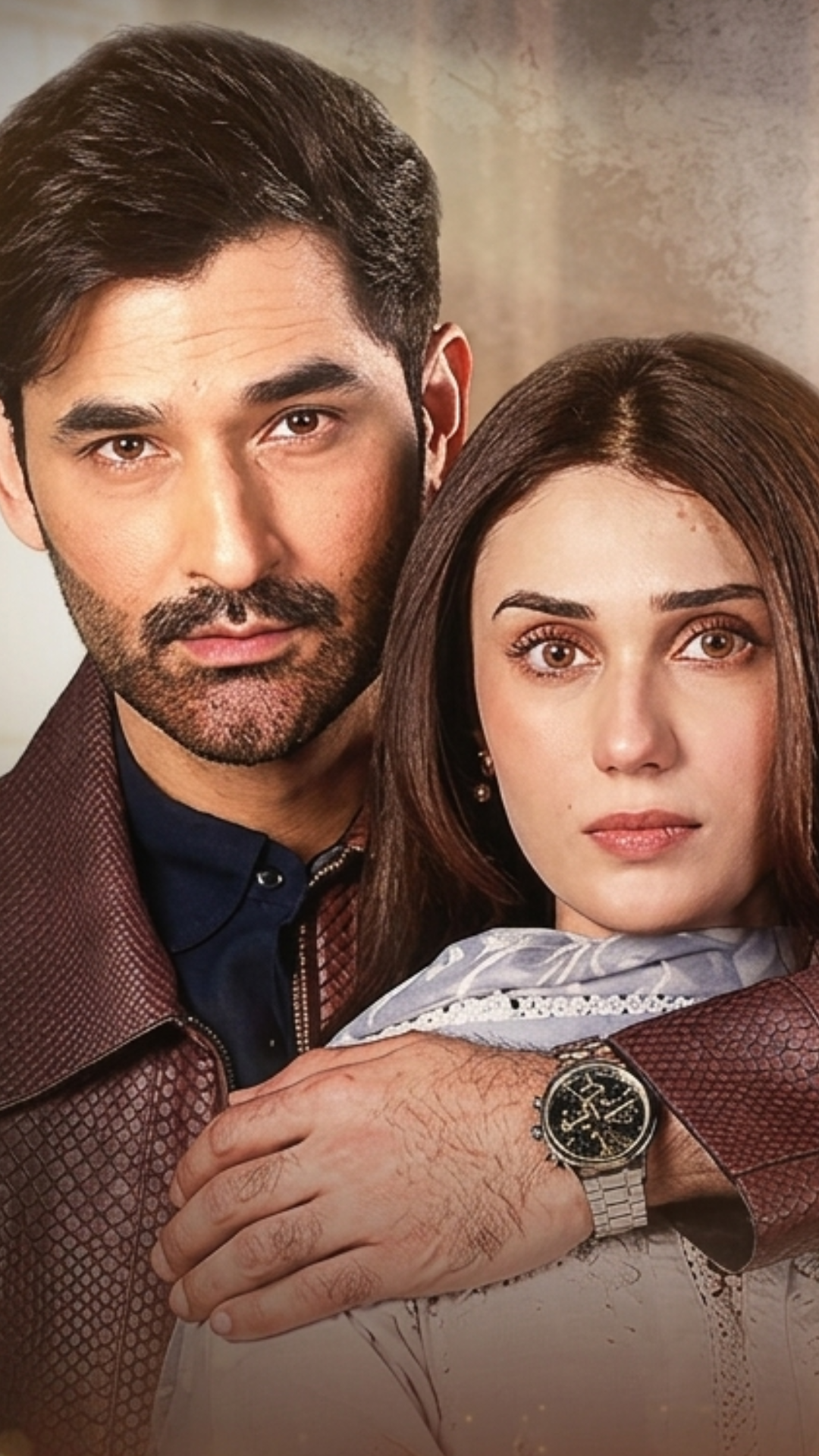




Pakistan's television scene often reflects the complex dynamics of its society. Few recent shows have done this as boldly as HUM TV’s weekend hit, Aye Dil Aazma Nahin. Since it debuted on March 29, 2026, this family drama has captivated viewers by exploring familial ties and the damaging effects of deep-rooted insecurities. Now past its twenty-seventh episode, Aye Dil Aazma Nahin has become a prime-time staple, drawing audiences into a world where love, validation, and rivalry collide with serious consequences.
The Narrative
At its heart, Aye Dil Aazma Nahin tells the emotionally charged story of Eshal (Hina Tariq) and Aiza (Ayesha Afridi), two step-sisters caught in a fierce domestic rivalry. The story, written by Maimona Aziz and MP Content, skillfully creates a setting where bias from their mother has soured sisterly love from the start. From childhood, one daughter receives constant praise, while the other suffers emotional neglect and harmful comparisons. This imbalance breeds insecurity, which grows into overwhelming jealousy as the sisters become adults.
The tension reaches a boiling point with the arrival of Zain (Mirza Zain Baig). His entry into the family seems harmless but turns him into the coveted prize in a silent, intense competition for love and approval. The plot cleverly depicts the tangled web of family manipulation, broken promises, and emotional blackmail that follows. Director Saqib Zafar navigates the high-stakes arguments and emotional confrontations between the sisters about fairness and Zain's affection with impressive skill, keeping the dramatic tension alive without allowing it to stagnate. The show powerfully shows how far insecurity can push someone, highlighting the emotional toll when family love becomes a contest. A striking line captures the show’s central tragedy:
Jab maa hi do betiyon ke darmayan deewar khari kar de... toh bahar walon se gila kya karna.
This poignant statement gets to the heart of the conflict, revealing the wounds caused by deep family divisions.
Character Analysis
The casting for Aye Dil Aazma Nahin is a major strength, with Mirza Zain Baig, Hina Tariq, and Ayesha Afridi offering compelling performances. Mirza Zain Baig, as Zain, plays the attractive male lead whose choices create significant tension. He brings a quiet strength and a sense of unintended responsibility for the surrounding chaos, earning appreciation for his honest portrayals. His character is more than a prize; he navigates a tricky emotional landscape, often caught between the desires of the two women.
Hina Tariq's performance as Eshal is outstanding. Eshal is emotionally intricate and driven, her behavior shaped by deep insecurities. Tariq effectively portrays a character who must manipulate and show vulnerability, convinced she has to earn every ounce of love and attention. Her performance highlights how early emotional trauma can morph into harmful adult actions.
On the other hand, Ayesha Afridi shines as Aiza, the targeted step-sister who bears the brunt of family rivalry and maternal bias. Afridi gives Aiza a quiet strength, showcasing a character who must endure neglect while confronting the unfairness of her circumstances. The emotional clashes between Eshal and Aiza are memorable, demonstrating the intense dramatic energy both actresses bring to their roles. The supporting cast, including Ahsan Afzal, Malika Riaz, Sahiba Afzal, Asad Malik, Shaheen Khan, Beena Chaudhry, and Sara Nadeem, adds depth, enriching the family dynamics and maintaining the emotional weight of the central conflict.
Themes & Social Commentary
Aye Dil Aazma Nahin goes beyond mere family drama; it offers sharp commentary on critical social issues. It honestly explores the theme of toxic sibling rivalry, showing how jealousy can ruin essential human relationships. Its most profound contribution is its exploration of the harmful psychological effects of maternal bias. The series clearly states that favoring one child over another creates wounds that success cannot heal, leading to emotional scars and resentment.
The show portrays its "villain" not as a single character but as the harmful forces of jealousy, favoritism, and manipulative behavior fueled by insecurities. This thoughtful approach allows the audience to grasp the roots of the conflict without merely vilifying one character. The moral is clear: parental love must be shared equally, as any deviation from this principle can tear families apart. In a culture that values family ties, Aye Dil Aazma Nahin uncovers the hidden issues, encouraging viewers to consider the psychological well-being of children in biased situations.
OST & Aesthetic
The haunting score of Aye Dil Aazma Nahin has received wide acclaim, achieving high digital success. Produced by the HUM TV music publishing house, the OST, performed by a local group, highlights the show's somber tone. It serves as an emotional backdrop, enhancing the sorrow and turmoil the characters experience. The music complements the scenes, drawing viewers deeper into the drama's emotional depth.
Visually, the series takes place in modern urban middle-to-upper-class households and estates in Karachi. The polished yet relatable aesthetic mirrors the typical settings of contemporary Pakistani dramas, without overshadowing the raw emotional core of the story. Director Saqib Zafar effectively manages the high-stress family dynamics. Critics have praised his ability to maintain engaging pacing, ensuring that even the most intense confrontations feel dynamic and forward-moving. This skill is essential in a drama focused on emotional depth and character interactions. The fast-paced conflicts and cliffhangers make the show appealing for binge-watching.
Final Verdict
Aye Dil Aazma Nahin is a standout in Pakistani television, a gripping family drama that reveals the emotional damage caused by favoritism and jealousy among siblings. Its success is clear, consistently achieving high TRP ratings for HUM TV during its competitive prime-time slot. Digitally, the drama has made an impressive impact; its premiere episode drew over 3.8 million views on YouTube, with episodes typically hitting 3.1 to 3.7 million views within days of release. The entire playlist is collecting tens of millions of views, indicating a strong and growing international audience among the South Asian diaspora.
Viewers have responded positively, appreciating the intense drama between Hina Tariq and Ayesha Afridi, in addition to Mirza Zain Baig's sincere performance. Although the drama occasionally sparks discussions about its themes of toxic rivalries, it largely avoids real-world controversies, showcasing focused storytelling. Often compared to classic dramas like Maat and Jalan, Aye Dil Aazma Nahin has carved out its own niche as a beloved household favorite.
As the series continues, audiences are eager to see how the web of deceit and desire unfolds. For anyone seeking a powerful and emotionally charged story that explores the depths of human emotions and complex family relationships, Aye Dil Aazma Nahin is a must-watch. It serves as a reminder that the quest for validation within the home can leave lasting scars.