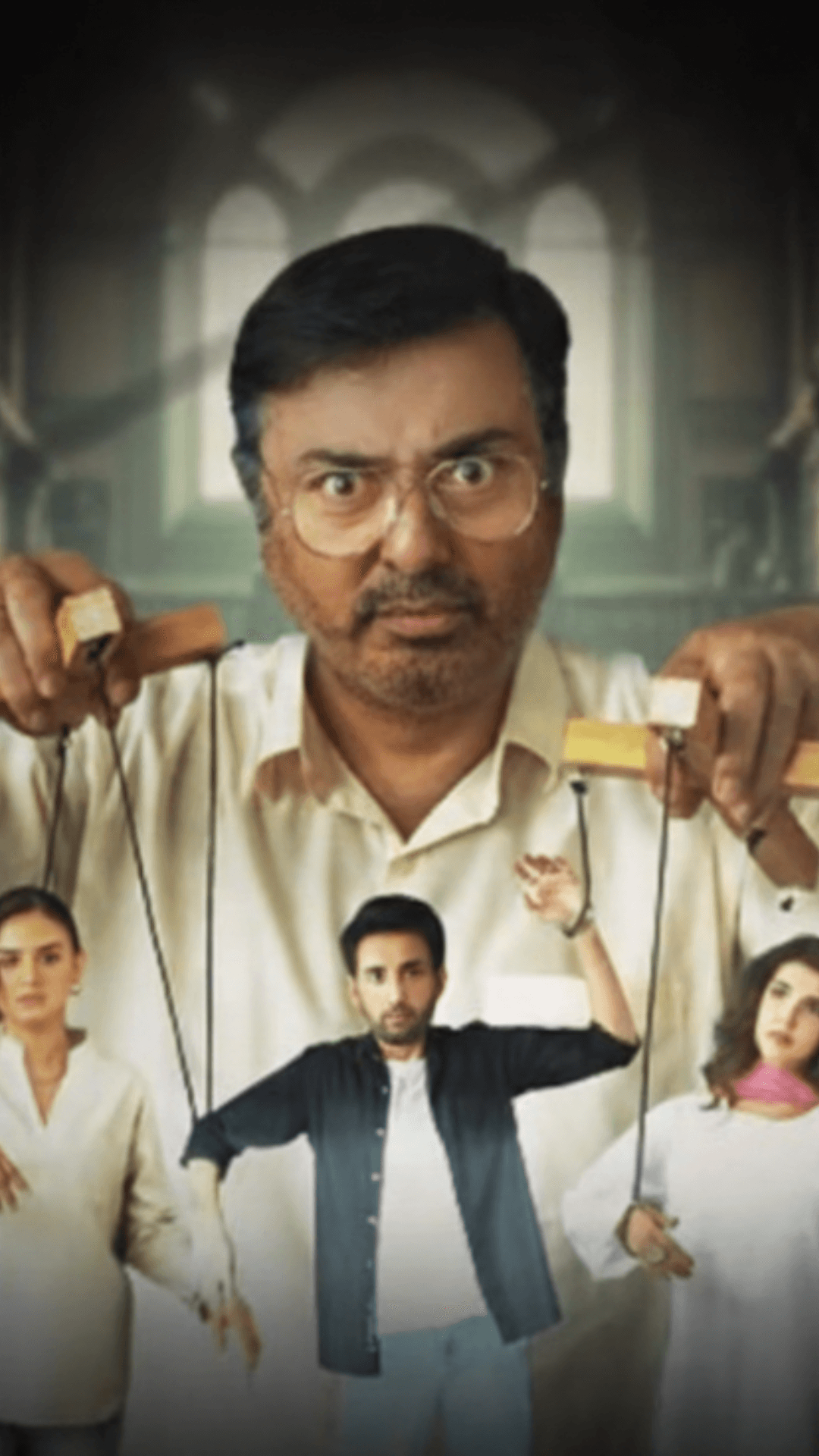

In the competitive world of Pakistani prime-time television, finding quality storytelling often feels like a risk. ARY Digital’s Shar Pasand came as a gripping exploration of the roles we play. It aired from October 2025 to April 2026, and this production by iDream Entertainment took the spotlight with a story that dared to look beyond the appearance of domestic respectability. Directed with a steady hand by Aehsun Talish and written by Sara Sadain Syed, this fifty-two episode series moved past the usual clichés of family strife to present a nuanced, often unsettling view of how societal pressures and manipulative outsiders can jeopardize a marriage. It remains one of the most successful and critically acclaimed productions of the season, with over 165 million cumulative views on digital platforms.
The Narrative
The story revolves around Sanam and Fida, a couple whose five-year marriage embodies genuine love until they relocate and face toxic interference. While their relationship is at the show's core, the plot is driven by Farasat Ali. His public image of kindness and dignity serves as a perfect cover for the dark, cruel behavior he displays at home. The drama skillfully contrasts the outside pressures on the couple with the psychological warfare perpetrated by Farasat, creating an experience that blends psychological thriller elements with family drama. It explores how trust becomes fragile under the whispers of neighbors and the hidden tempers of those we are taught to respect.
Character Analysis
Naumaan Ijaz delivers a performance that will be remembered as a highlight for antagonists in Pakistani drama. As Farasat Ali, he displays a terrifying duality, shifting from charming to ruthless in a way that is deeply unsettling. He is matched by Hareem Farooq, whose portrayal of Sanam is impressive; she brings quiet strength to the character, making her defense of her husband, Fida, feel both heroic and relatable. Affan Waheed as Fida adds the necessary vulnerability that raises the emotional stakes, while Hira Mani and Nadia Afgan layer the neighborhood dynamics in a way that keeps the plot moving. The cast performs with a harmony that makes the characters’ internal conflicts just as vivid as their external struggles.
Themes & Social Commentary
Shar Pasand sharply criticizes the performative nature of our society, where reputation often matters more than integrity. The series challenges viewers to face the reality that someone can be loved and respected in the community while being a source of fear and pain at home. The show captures this message best with a line that resonates with anyone who has lived under the scrutiny of a judgmental society:
Duniya ke saamne shareef banna aasan hai, lekin ghar ki chaar deewari sach bolti hai.
This theme serves as a strong reminder that true character emerges not in public, but in the private moments of kindness or cruelty we show our family. It advocates for a marital trust strong enough to ignore outside manipulation while also calling for an end to the silence that allows domestic abuse to thrive under the guise of a "respectable" reputation.
OST & Aesthetic
The sound of Shar Pasand is as striking as its story, featuring the haunting theme track, Khuda Tou Dekhta Hai. The vocal talent of Rahat Fateh Ali Khan, along with the romantic melodies of Yashal Shahid and Danish Roomi, creates an emotional experience that flows smoothly between tense moments and tender, romantic scenes. Visually, Aehsun Talish builds a world that feels both vast and suffocating. By setting the series in a modern urban neighborhood, it brings the threat closer to home, implying that the most dangerous secrets are often next door. The cinematography is polished, treating every scene with the weight of a feature film.
Final Verdict
As it concluded in April 2026, Shar Pasand emerged as a must-watch for anyone who enjoys serious, performance-driven television. It’s rare for a daily soap to maintain such high production quality and narrative consistency over fifty-two episodes; yet this series kept its audience engaged until the final scene. The finale provided a satisfying sense of justice, delivering a realistic resolution that left both the characters and viewers feeling that the truth had finally triumphed. With outstanding performances already garnering award buzz and a reach that spans the global South Asian community, it is an essential piece of storytelling that reminds us that, ultimately, masks must fall.
Which moment of Sanam’s determination stood out to you most? Did you find Naumaan Ijaz’s transformation into Farasat Ali as chilling as many others did? We’d love to hear your thoughts on this modern masterpiece in the comments!