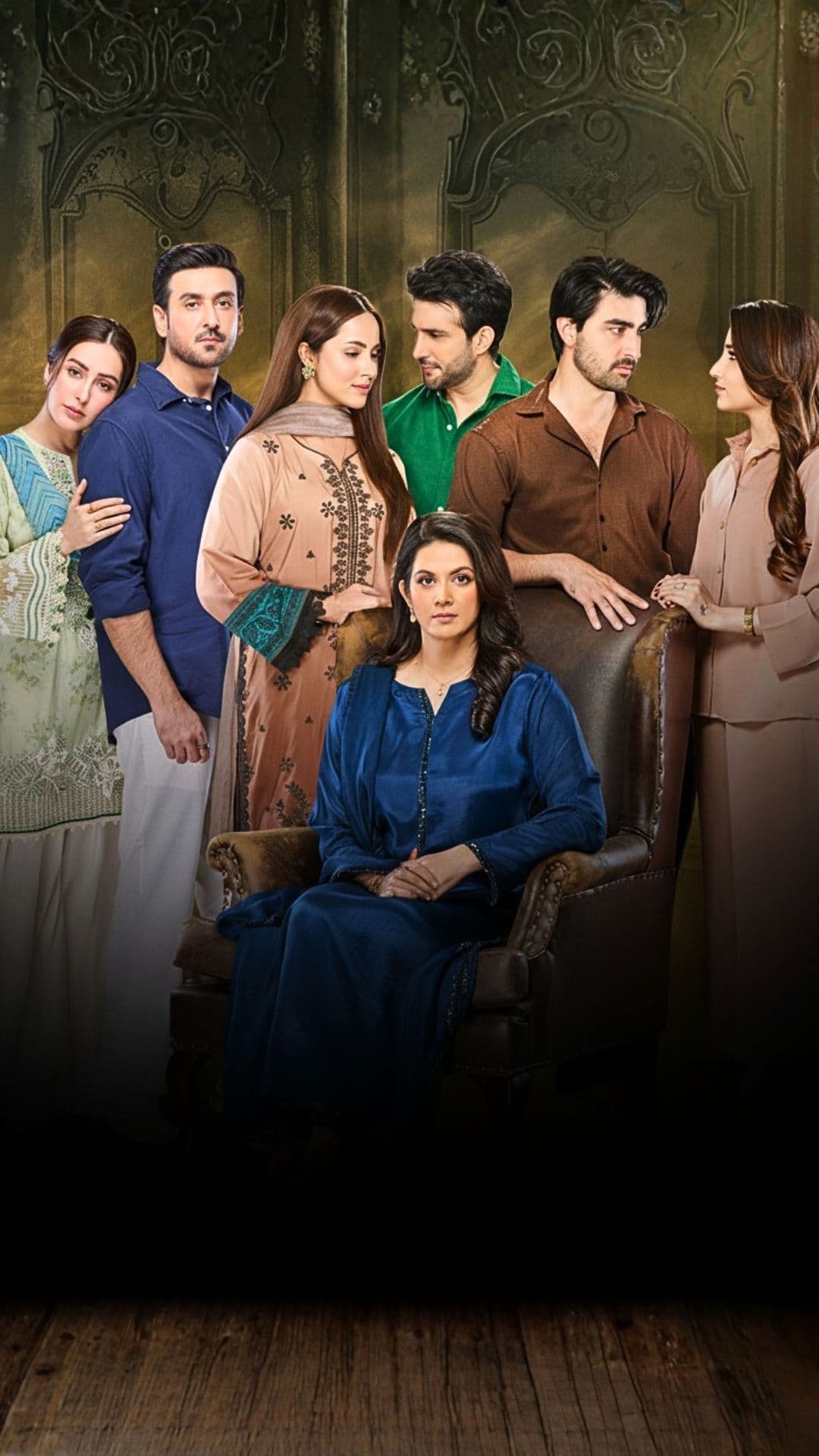

In the vibrant and competitive world of Pakistani prime-time drama, where stories of family often reflect societal realities, Sara Aapi stood out as one of the most talked-about serials in early 2026. It aired on Har Pal Geo and was produced by the well-known 7th Sky Entertainment, led by Abdullah Kadwani and Asad Qureshi. The series consistently captured the Monday and Tuesday 8:00 PM slots. Directed by Asad Jabal and written by Saqlain Abbas, Sara Aapi offered a gripping story focused on the complexities of sibling relationships, the burden of sacrifice, and the dangerous shift from protection to control. Its ability to spark national conversations highlights its cultural relevance, combining intense emotional drama with the high production values characteristic of 7th Sky Entertainment.
The Narrative Core
At its center, Sara Aapi tells the story of Sara, a woman who, after the sudden death of her parents, takes on the role of guardian for her three younger brothers—Burhan, Adnan, and Usman. What begins as a deep act of love and duty becomes a rigid structure of authority. Sara sacrifices her own youth, dreams, and opportunities for marriage and personal growth to care for her siblings, guiding both the family and their inherited business to success. However, as the brothers grow into adults seeking independence and their own lives, Sara's protective instincts turn into a suffocating control that stifles their aspirations.
The drama skillfully depicts the household as a pressure cooker of hidden emotions. Each brother's attempt to assert his individuality—whether through career choices, romantic interests, or everyday decisions—clashes with Sara's strict commands. The narrative builds gradually, layering household conflicts with tender moments that reveal the genuine love behind Sara's actions. This balance keeps the story from becoming a caricature and instead presents a complex look at a family torn apart by good intentions gone wrong. The tension rises toward a dramatic conclusion that challenges the foundations of loyalty and love, leaving viewers divided on the moral questions surrounding unchecked authority in the traditional Pakistani joint family system.
The series consists of 32 episodes and wraps up in mid-May 2026. Its episodic format allows for rich character development, with subplots involving the brothers’ partners adding external tension to the family conflicts. By intertwining personal ambitions with broader themes of inheritance, gender roles, and generational changes, Sara Aapi goes beyond simple entertainment and provides a thoughtful perspective on contemporary Pakistani families.
Standout Performances and Ensemble Strength
Savera Nadeem’s performance as Sara is the highlight of the series. She brings a compelling intensity to the role, making the character both powerful and sympathetic. In the early episodes, her selfless devotion contrasts with her later transformation into a controlling figure. Nadeem masterfully conveys vulnerability under her stern facade—through fleeting glances, pauses, and emotionally charged speeches—elevating Sara from a typical “controlling matriarch” to a deeply tragic protagonist. Viewers connect with her fear of abandonment while struggling with the consequences of her overreach.
The brothers add depth to the story: Sami Khan as Burhan brings a relatable resilience as the eldest brother caught between gratitude and resentment. Adeel Chaudhry gives Adnan a quiet intensity and moral complexity, while Khaqan Shahnawaz portrays Usman with a youthful innocence that underscores the long-term effects of Sara’s control. Sidra Niazi and Nimra Khan, as the romantic interests and sparks for rebellion, deliver strong performances that infuse energy and conflict into the household. The supporting cast, including Ammara Malik, Mahmood Aslam, Salma Hasan, Syed Mohsin Gillani, Humaira Bano, Seemi Pasha, and Adnan Jaffar, contributes to a believable family dynamic, making every interaction feel real and charged.
The chemistry among the cast shines through, with confrontations filled with raw emotion. Nadeem’s strong presence grounds the series, but it is the combined strength of the cast that keeps viewers engaged throughout its run.
Themes and Social Relevance
Sara Aapi offers sharp insight into the possessive nature of familial love in traditional South Asian societies. It questions the idea of sacrifice as a lifelong obligation: Can years of selflessness justify permanent compliance? The drama shows how a well-meaning guardian’s control can undermine individual freedom, leading to resentment and defiance. Sara’s repeated statement—“Maine tum sabko paala hai, tumhari zindagi ka har faisla sirf mera hai!”—captures the central conflict and reflects real-life discussions about elder authority in Pakistani families.
The series avoids easy answers, instead exploring the gray areas where love and tyranny overlap. It highlights the harmful cycles that emerge when parental figures focus on their idea of family unity at the expense of their children's well-being. In doing so, Sara Aapi adds to ongoing cultural conversations about mental health, personal boundaries, and changing gender roles in the home. Its portrayal of the brothers' struggles resonates with younger viewers navigating tensions between tradition and modernity.
Critics have pointed out some reliance on familiar tropes of the controlling elder genre, but the show’s commitment to emotional truth and its willingness to confront difficult issues give it considerable weight. It serves as a cautionary tale: unchecked authority, even when rooted in love, can destroy the very relationships it aims to protect.
Production Excellence: Music, Visuals, and Direction
Shani Arshad’s original soundtrack (OST) is a highlight, blending orchestral depth with moving vocals that reflect the drama’s serious themes. Lyrics by S.K. Khalish enrich the emotional landscape, with songs that evoke nostalgia for lost innocence and the heaviness of looming change. The score enhances key scenes without overpowering the dialogue, adding to the series’ immersive experience.
Visually, 7th Sky Entertainment upholds its reputation for high production values. The lavish family mansion serves as more than just a setting—it symbolizes Sara’s domain, with its grand yet constraining spaces reflecting the characters' psychological entrapment. The cinematography uses tight framing during confrontations to heighten feelings of claustrophobia while employing wider shots to highlight isolation amidst plenty. Asad Jabal’s direction maintains a consistent pace, balancing intense dramatic moments with quieter, reflective scenes that allow characters room to breathe.
Legacy and Reception
Concluding in May 2026, Sara Aapi attracted a large audience, with episodes receiving millions of digital views on platforms like YouTube. Its shocking finale—featuring a tragic car accident involving the main character—sparked animated discussions. Many viewers appreciated the story’s unflinching approach to consequences, arguing that Sara’s journey required a decisive break to shift the cycle of control. Others hoped for her redemption, wanting her to accept her brothers’ independence.
This division reflects the drama’s impact. While some criticized the repetitive plot devices typical of the genre, Savera Nadeem’s compelling performance consistently lifted the material. With its exploration of universal themes framed within a distinctly Pakistani context, Sara Aapi joins the ranks of memorable 7th Sky productions that urge audiences to reflect on their own families.
In a time when dramas often focus on spectacle, Sara Aapi highlights the power of intimate storytelling. It is recommended for those looking for nuanced character studies and thought-provoking drama. As Pakistani television continues to grow, series like this confirm the medium’s ability to entertain while revealing societal truths.